
Last updated November 25, 2026
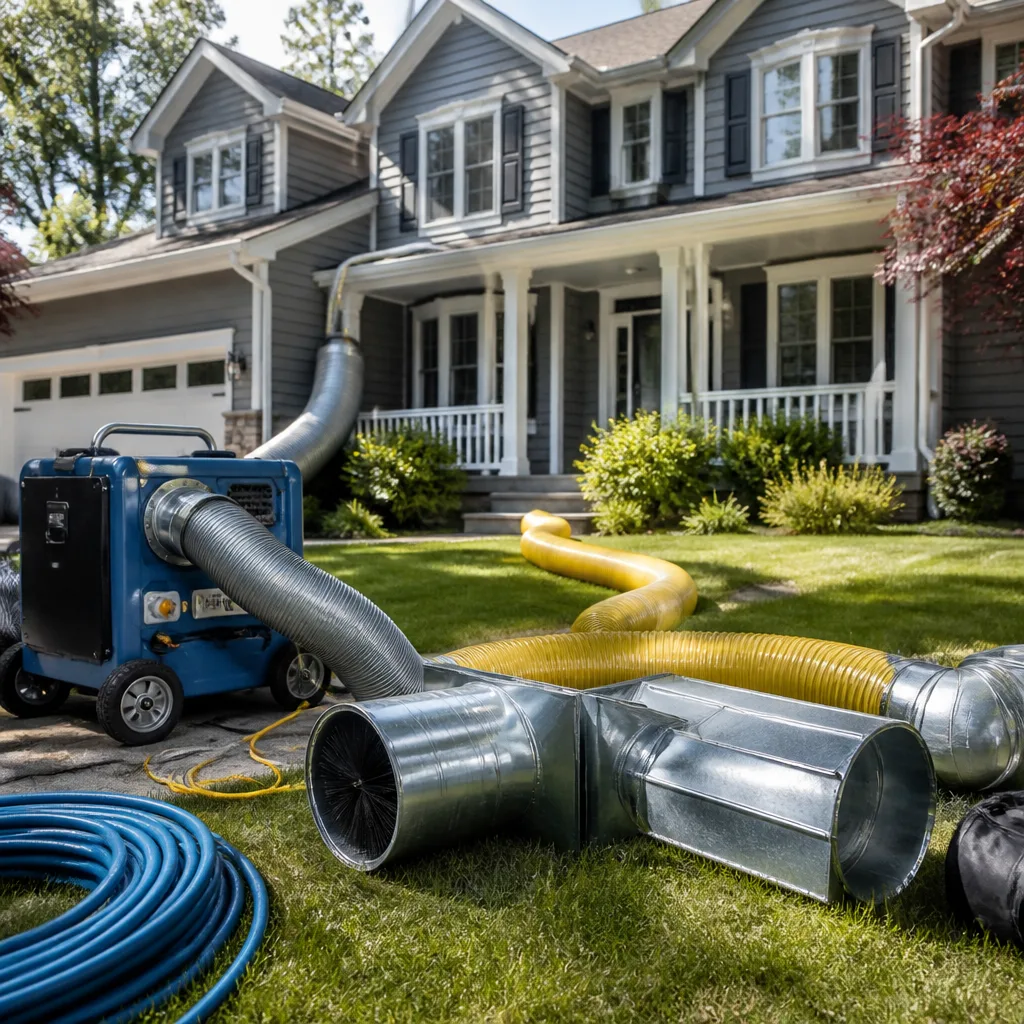 Whole-home duct cleaning
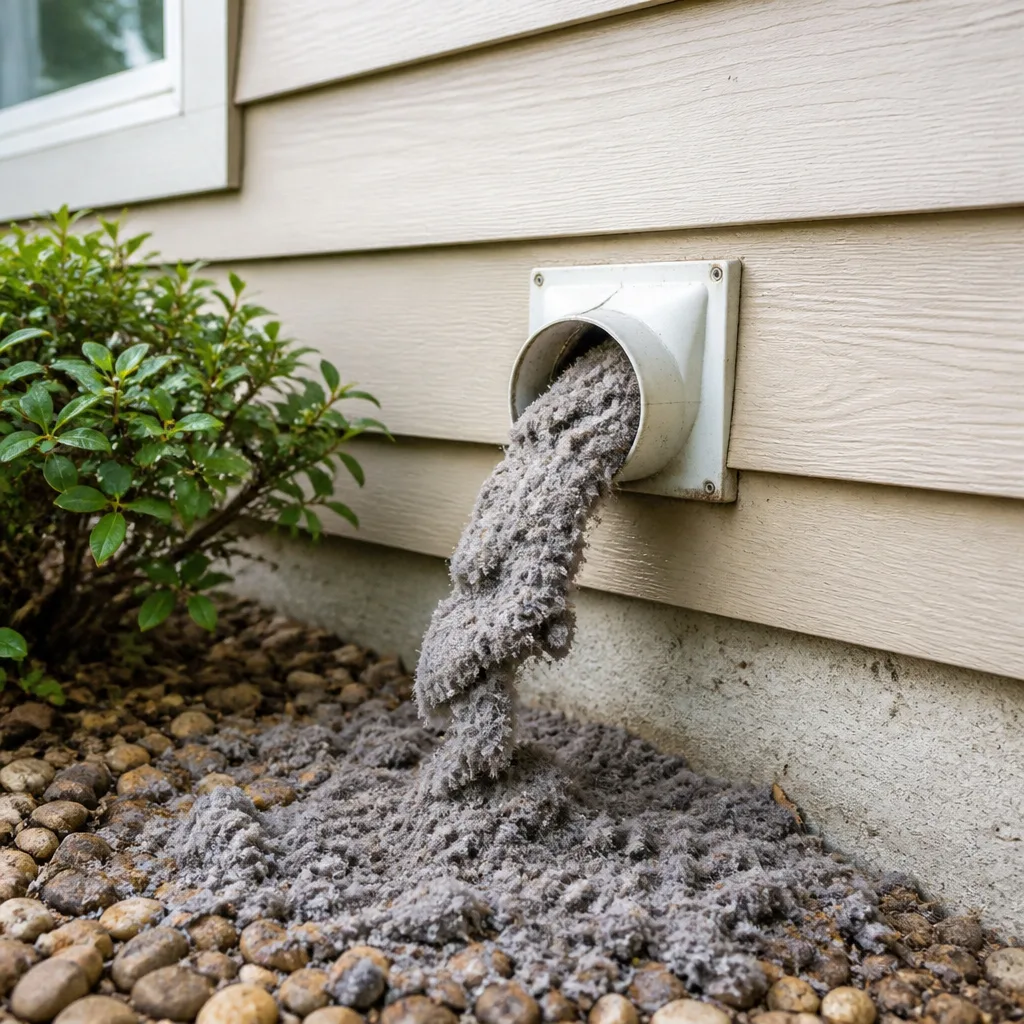 Dryer vent cleaning
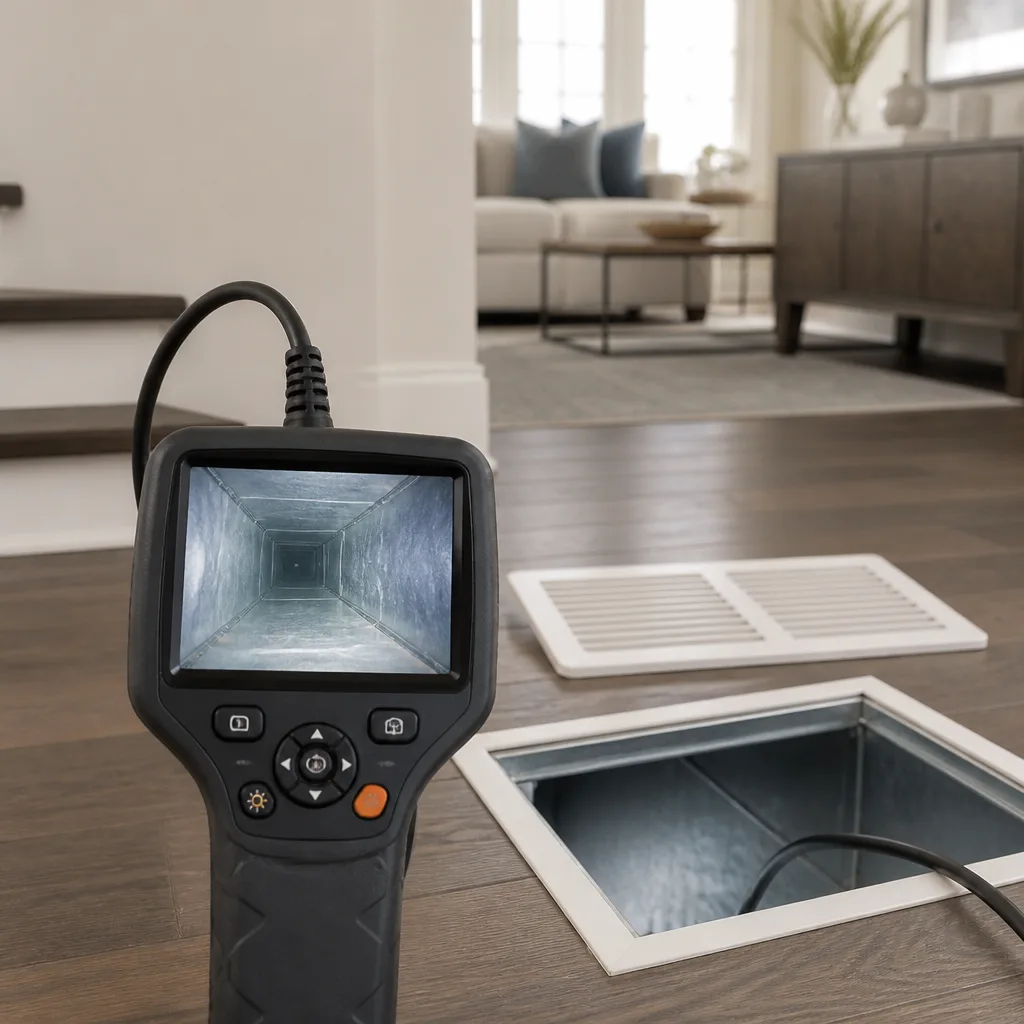 Camera inspection
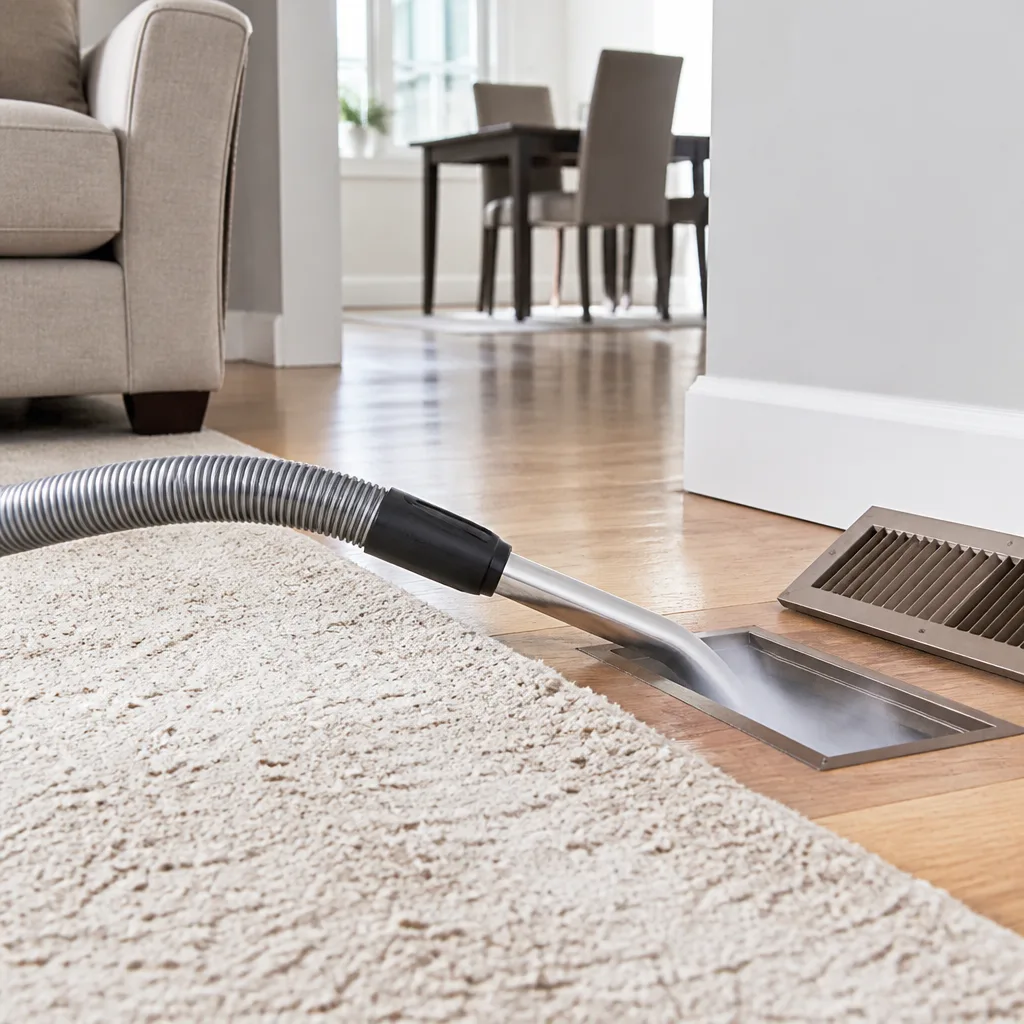 Sanitizing & deodorizing
Whole-system duct and dryer vent check with before-and-after photos - you see exactly what came out of your vents
That "$99 whole-house special" is a bait ad - the real number appears once they are in your hallway, or the "clean" is a shop-vac at the register. We photograph the inside of your ducts before and after instead.
DIY vs Professional Air Duct Cleaning: The Federal Way Homeowner’s Decision Guide
Most homeowners who ask whether they can clean their own ducts are asking the wrong question. It’s not a question of capability. You can absolutely pull a register cover, run a brush down the opening, and knock dust loose. The question that matters is whether the contamination you’re worried about lives at the register or down inside the trunk system, the air handler box, and the return plenum. Consumer gear reaches about 18 inches. It does not reach the parts of your system where debris actually settles over the years. This guide walks Federal Way homeowners through what home equipment can and can’t touch, when a DIY first step is genuinely reasonable, when it isn’t, and how to assess your own system before spending money on either path.
Quick Answer
DIY air duct cleaning is a reasonable first step only for surface debris at the registers, post-renovation dust that hasn’t entered the trunk system, and routine dryer vent lint removal. Anything deeper (mold in the ducts, rodent contamination, a full-system debris load, or wet ducts after a leak or flood) requires professional equipment rated at 2,000 CFM or higher with agitation tools, because a shop vac cannot move enough air or reach far enough to clean a residential trunk system. Here in Federal Way, the deciding factor is almost always whether the contamination is at the register (DIY territory) or inside the trunk (professional territory).
Styles & brands we work with
- Whole-home duct cleaning
- Dryer vent cleaning
- Camera inspection
- Sanitizing & deodorizing
Table of Contents
- What Consumer Equipment Can and Can’t Reach
- Three Scenarios Where DIY Is a Reasonable First Step
- Four Scenarios That Require Professional Equipment
- How to Do a Legitimate DIY Assessment First
- DIY Mistakes That Damage Flex Duct Systems
- What a Professional Cleaning Actually Involves
- The Dryer Vent: A Special Case Worth Its Own Decision
- Cost, Value, and What You Actually Get
What Consumer Equipment Can and Can’t Reach
A consumer HEPA shop vac pulls somewhere between 100 and 200 cubic feet per minute at the hose end. A professional duct cleaning system pulls 2,000 CFM or more, with negative pressure maintained across the whole system. That gap matters because duct cleaning isn’t about scrubbing one spot. It’s about moving enough air through the entire system, in a controlled direction, to lift settled debris and carry it out.
Here’s the honest picture of what consumer equipment can physically access:
- A register opening, about 12 to 18 inches in – a shop vac hose or a homeowner brush kit fits this far and no further.
- Straight runs of rigid duct within arm’s reach – if you can see it and reach it with a hose, you can touch the surface.
- The dryer vent from the appliance end – a brush kit and a shop vac can clear the first segment.
What it can’t reach:
- The main trunk lines – these run through walls, ceilings, and crawlspaces. Without cutting into them, they’re unreachable from any register.
- The air handler box and return plenum – the return side is where the heaviest debris load typically sits, and it’s sealed behind panels and cabinetry.
- Branch runs longer than 18 inches – the average residential branch run is several feet, sometimes much longer in a Federal Way home with an offset furnace.
- The far side of any turn or transition – debris collects on the outside of every elbow, and no shop vac hose rounds a tight 90-degree turn.
This is the central fact of the DIY vs professional question: it isn’t a matter of skill or effort. It’s a matter of physical reach and air volume. Your shop vac is a good tool for the job it’s built for. It is not built for cleaning a duct system, and no amount of brush attachment changes that.
Three Scenarios Where DIY Is a Reasonable First Step
We’ll say it plainly: DIY has a real place. If your system falls into one of these three categories, there’s no reason to book a professional cleaning before you’ve tried the simple version yourself.
1. Visible surface debris at the registers
If you pull a register cover and see a thin dust film, a few stray hairs, or a light accumulation of lint on the grille, that’s surface-level and reachable. Vacuum the cover, wipe the grille, and check again in a few weeks. If you see the same light film return slowly, your system is behaving normally. If you see a heavy mat of dust sitting just inside the opening within a week of cleaning, something upstream is shedding debris, and that’s a different problem.
2. Post-renovation dust at the registers
Drywall dust after a remodel gets everywhere. If you had a bathroom or a kitchen done and the contractor sealed the returns properly during dusty work, most of the dust will land on the register covers and just inside the openings. A shop vac with a HEPA filter handles this well, as long as you do it before that dust gets pulled into the trunk during the next heating cycle. If the contractor didn’t seal the returns, the dust load has likely moved past the register, and the DIY approach is playing catch-up.
3. Routine dryer vent maintenance
The dryer vent is the one air pathway where homeowners can genuinely clear most of the lint themselves with a brush kit, especially if the run is short and mostly straight. Federal Way’s cooler, wetter months mean dryers run more, and lint accumulates fast. This is maintenance, not a one-time event. But when the run has multiple elbows, a long horizontal segment, or runs through an exterior wall with a tight termination, the brush kit stops being effective and the fire risk is real. That’s the line where we suggest dryer vent cleaning as more than a DIY chore.
In all three scenarios, the DIY move is a check, not a substitute. You vacuum what you can see, you note what comes back, and you let the pace of the debris tell you whether you’re looking at a surface issue or a system issue.
Four Scenarios That Require Professional Equipment
These four situations share one thing in common: what you’re dealing with lives past the point where consumer equipment stops. In every case, a shop vac attempt either does nothing or makes the problem worse.
1. Suspected or confirmed mold in the duct system
Mold needs moisture and organic material. In the Pacific Northwest, an over-humidified home, a slow leak, or a condensate issue on the air handler is enough to seed growth on duct liner. You might notice a musty smell when the system kicks on, visible dark spotting at the register throat, or corrosion on the register screws. Do not agitate mold with a shop vac. Consumer vacuums will disperse spores through the home before they capture them, and a HEPA filter on a shop vac is not a sealed system. This is a professional job, and it typically involves agitation with sealed extraction and a sanitizing treatment. We use Abatement Technologies air filtration equipment for exactly this kind of work because the exhaust has to be filtered, not just the pickup.
2. Rodent contamination
Mice and rats in ductwork leave droppings, nesting material, and urine. This is a health and safety issue, not a housekeeping one. Hantavirus and other pathogens in rodent waste are the reason abatement contractors wear respiratory protection and seal the work area. A homeowner with a shop vac is not equipped for this and shouldn’t attempt it. The work requires negative pressure, HEPA capture, mechanical agitation, and in some cases a sanitizing treatment afterward, plus sealing any entry points the rodents used. If you smell something sharp or stale, or you’ve seen droppings near a register or on top of the air handler, call a professional.
3. A heavy full-system debris load
Signs of this: visible dust plumes when the system starts, a heavy build-up on every register grille rather than just one or two, a noticeable drop in airflow that isn’t explained by the filter, and a home that hasn’t had a duct cleaning in many years despite ongoing remodeling or pets. Clearing this takes 2,000+ CFM of negative pressure across the whole system with mechanical agitation to break debris free and keep it moving toward the capture point. A shop vac creates none of that. It vacuum’s one register while debris loosens from every other one into the house.
4. Wet ducts after a leak or flood
If a pipe burst, a condensate pan overflowed, or a roof leak found its way into the ductwork, the assembly is wet. Cleaning wet ducts before drying them is the wrong order: you push contaminated moisture deeper into the system and set the stage for mold growth. Professional duct drying and cleaning in Federal Way needs to happen together, with the equipment to dry the assembly and the equipment to clean it once it’s dry. There’s no homeowner version of this job.
How to Do a Legitimate DIY Assessment First
Before you spend money on a shop vac, a brush kit, or a professional cleaning, do a two-hour assessment. It tells you which category your system falls into. We walk Federal Way homeowners through this on the phone all the time, and it’s worth doing whether you then hire us or not.
- Pull every register cover. Removing a cover is a screwdriver job, not a duct technician job. Take off the grille at every floor, wall, and ceiling register and look inside the opening with a flashlight.
- Check for visible dust on the grille and just inside the throat. Light, even film is normal. A heavy mat or a visible feathery growth means something upstream is shedding.
- Smell the air when the system first starts. Musty, sour, or sharp smells point to moisture, mold, or rodents. Clean air smells like nothing.
- Look for moisture at the air handler. A condensate leak, a wet filter, or standing water in a drip pan is a signal to stop and call a professional before running the system further.
- Check the return side. The return grille is usually larger than supply registers and carries heavier debris. If the return throat is visibly coated, the trunk is too.
- Note the pace of the debris. If a freshly vacuumed register shows new accumulation within a week, the source isn’t the register. It’s the system.
- Inspect the dryer vent. Disconnect the dryer, use a flashlight to look inside the vent run, and check the exterior termination for lint buildup or a bird’s nest.
If everything you find is at the register, DIY is a fair call. If anything on this checklist points past the register, it’s time to talk to someone with professional-grade equipment. We’re happy to walk through what you find over the phone. Call (844) 625-7649. We answer 24/7. Fast dispatch from 7am to 7pm, Sunday through Friday.
DIY Mistakes That Damage Flex Duct Systems
Most modern residential duct systems installed in Federal Way homes in the last twenty years use flexible duct (flex duct) on branch runs. It’s fast to install, quiet, and works well. It also punishes homeowner cleaning attempts more than rigid sheet metal does, because flex has a thin inner liner that’s easy to damage.
Here are the three most common DIY failures we see and hear about:
Liner puncture
A homeowner brush kit driven down a flex branch often snags the wire helix inside the liner and tears the plastic skin. Once the liner is punctured, the insulation around it becomes a dust trap and, on the return side, a leak. Symptoms: a soft hiss near the register, dust reappearing at the register faster than before, and a higher heating bill.
Connection loosening
The joints between flex duct and metal collars are held by a mechanical fitting, usually a collar band or tape. Aggressive agitation from a homeowner brush kit will loosen those joints, and once a joint is loose, air leaks into the wall cavity or attic instead of reaching the register. This is one of the most common causes of “the system just isn’t blowing like it used to.”
Mold dispersal from improper agitation
Brushing a duct with biological growth in it, without sealed capture, breaks the growth free and sends spores into the living space. A HEPA shop vac does not maintain negative pressure across the room; it just pulls air toward the hose end. In a sealed duct system, that’s the wrong direction of pressure and the wrong kind of capture. If you suspect mold, stop. The right move is professional cleaning that maintains negative pressure across the entire run and captures the exhaust through filtration equipment.
This is why we work with Rotobrush and Nikro agitation-and-extraction systems rather than homeowner-style gear. The tools are built specifically to reach into flex duct, agitate without tearing the liner, and extract with controlled pressure that protects the assembly. In our experience, one cleaning with the right tool costs less than repairing a torn flex branch.
What a Professional Cleaning Actually Involves
If you’re going to hire a professional cleaner in Federal Way, it’s worth knowing what a legitimate job looks like. The industry has earned some of its bad reputation from quick-visit operations that clean one or two registers and call it done. Here’s what a full-system job should involve, from opening valve to closing report.
- Assess the whole system before starting work. That means opening the air handler, looking at the trunk and every branch, and confirming the scope before any tools come out.
- Set negative pressure. A capture unit connects to the system and creates controlled negative pressure while agitation tools work inside. This is what keeps debris from spilling into the home.
- Agitate every branch and the trunk. Mechanical agitation breaks the bond between debris and duct wall. Without it, the vacuum just pulls at the surface.
- Clean the air handler and the return plenum. The heaviest debris load usually sits on the return side and in the blower compartment area. A job that skips these isn’t clean.
- Treat the system if needed. For systems with biological growth or rodent contamination, a sanitizing treatment after cleaning is the difference between cleaned and passive-safe. We use Abatement Technologies equipment for this work.
- Seal leaks and loose joints if present. Cleaning without sealing means the system leaks the same air it was leaking before. Duct repair and sealing is part of a full-system scope, not an upsell tacked on afterward.
- Document with before-and-after photos. Ask for photos of the return plenum, the trunk, and the air handler before and after cleaning. A reputable company has no reason to hide what they found.
One more note on scope: professional air duct cleaning should not stop at the ducts. If you’re hiring for the ducts, ask whether the price covers the air handler, the return plenum, and the blower compartment. Most “duct cleaning” quotes that feel surprisingly low cover one or two components and stop there. We work on the whole system because clean ducts are only part of the story. If you’re interested in the broader process, our air duct cleaning page walks through our scope in more detail.
The Dryer Vent: A Special Case Worth Its Own Decision
The dryer vent deserves its own decision tree because it’s the one air pathway in a Federal Way home where the DIY vs professional line is genuinely blurry. On the one hand, a homeowner with a brush kit and a shop vac can do real good in a short, simple run. On the other hand, dryer vent fires are a documented cause of home loss, and a partially-cleared vent creates a false sense of safety.
Here’s the honest breakdown:
- Short, straight run (under 6 feet, one elbow): DIY is genuinely fine. Brush it out, vacuum the termination, and recheck quarterly.
- Long or multi-elbow run: the brush kit will clean the first segment and miss the rest. Lint accumulates at every elbow and at the transition to the exterior wall.
- Runs through a wall or roof: professional cleaning with rotary agitation and vacuum capture is the only way to clear the full run without damaging the vent or disconnecting it from the termination.
- Exterior termination on the roof: impossible to clear DIY without climbing, and not something we recommend a homeowner do.
- Any sign of a bird’s nest, extended dry time, or a hot dryer top: call a professional. These are signals that a lint blockage is creating real fire risk.
For most Federal Way homes, a professional dryer vent cleaning once every year or two, depending on dryer use and vent length, keeps the run safe without asking a homeowner to do the risky parts. Get a free estimate if you’re not sure which category your vent falls into.
Cost, Value, and What You Actually Get
DIY duct cleaning costs time and a shop vac and a brush kit. Professional duct cleaning in Federal Way costs an estimated range that depends on system size, accessibility, number of branches, and whether the job includes repair and sealing or sanitizing. We won’t quote a number without looking at your system, but we can tell you how the cost analysis actually breaks down, because it’s not as simple as “DIY is cheaper.”
Here’s what to think through:
- DIY covers the register, the pro covers the system. If your problem is at the register, the DIY cost is right. If it’s in the trunk, DIY cost is wasted money on the wrong tool.
- Equipment cost adds up. A decent HEPA shop vac with attachments and a dryer vent brush kit is real money. If the job is done right once professionally, you likely won’t need either for years.
- Repair is not in the DIY scope. Cleaning without sealing fixes nothing if your duct system is leaking at the joints. Duct repair and sealing is one of the reasons we emphasize full-system work.
- Air quality improvements outlast the cleaning. For homeowners who want durable indoor air improvement, we sell and service Honeywell and Aprilaire whole-home air quality systems, and we can apply Guardsman-grade protective treatments as part of a sanitizing service. None of that is DIY territory.
- The value question isn’t the invoice; it’s whether the problem was actually solved. A cleaning that doesn’t reach the trunk doesn’t solve a trunk-level problem.
Get a free estimate from Federal Way Air Duct Cleaning Co before assuming the job is out of reach financially. Ask for a written estimate with line items, ask what’s included, and ask for before-and-after photos. The written estimate is what sets the final price.
Common Mistakes to Avoid
- Cleaning one register and assuming the trunk got clean. The registers are the easiest part of the job and the least useful indicator of system condition. If you clean one and stop, you learn nothing about the trunk.
- Using a shop vac on suspected mold without controlled exhaust. The exhaust blows back into the room you’re trying to protect. Without sealed negative pressure and HEPA filtration on the exhaust side, you’re moving spores, not removing them.
- Brushing flex duct with a homeowner kit at full speed. The liner is thinner than it looks. A torn liner or a loosened joint will cost more to fix than the cleaning would have.
- Skipping the air handler and return plenum. The return side and blower compartment typically hold the heaviest debris load in a Federal Way home. A job that doesn’t touch them isn’t a full-system cleaning.
- Ignoring the dryer vent because the ducts got done. The dryer vent is a separate fire risk and is often the most dangerous air pathway in a home. It needs its own inspection.
- Assuming a low quote is a good deal. Per-register pricing and teaser minimums are how the duct cleaning industry ended up with its reputation. Ask for a per-system price and a written scope, and expect the technician to spend real time on the work.
- Cleaning ducts without fixing the leaks. If your system leaks at the joints, you’re paying to clean air that was going to escape anyway. Ask about duct repair and sealing alongside cleaning.
See the difference
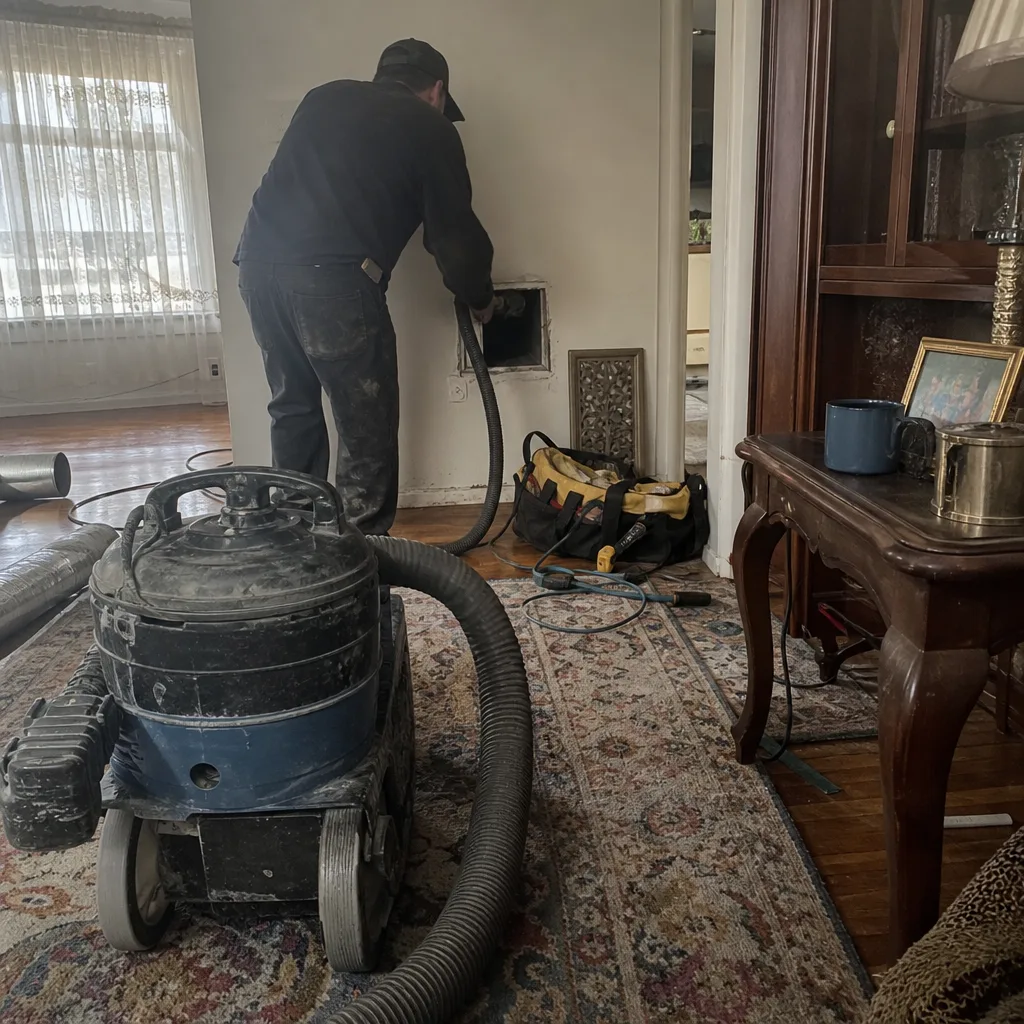 Before
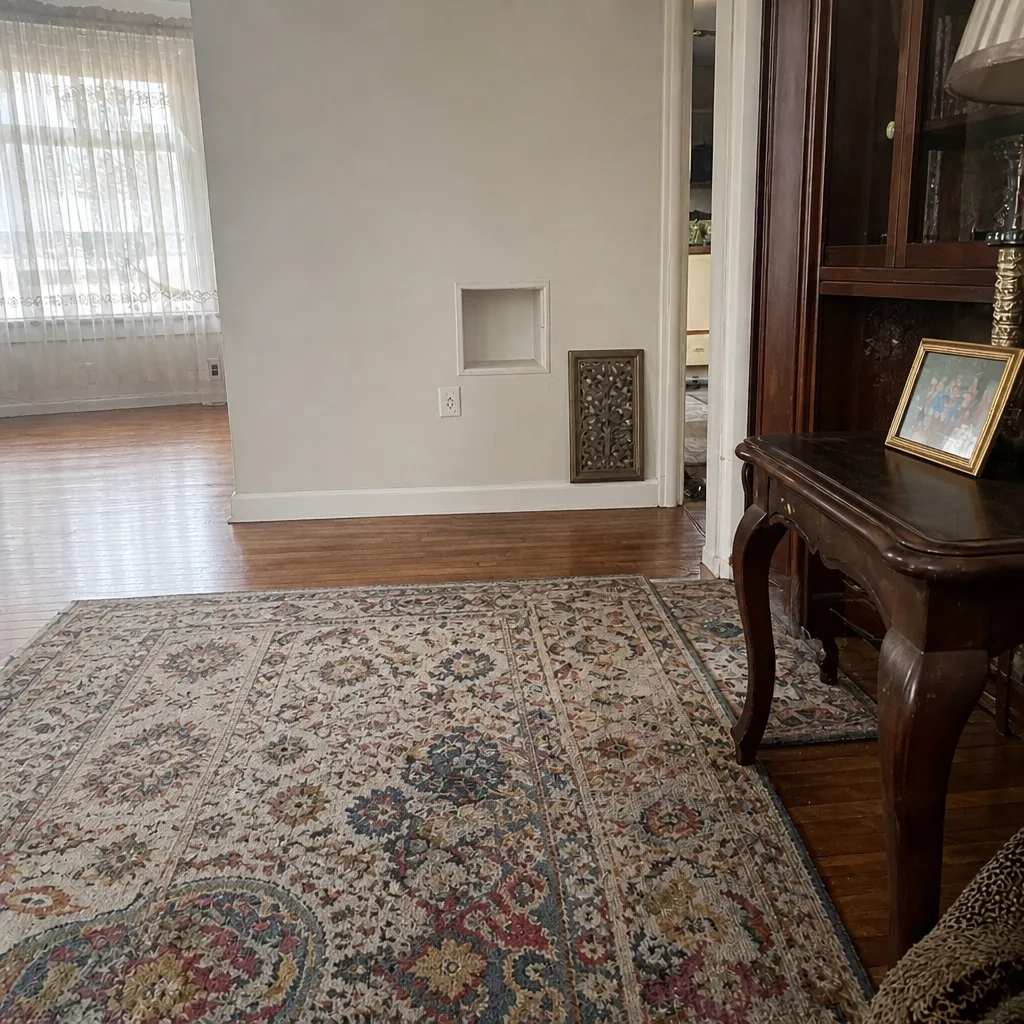 After
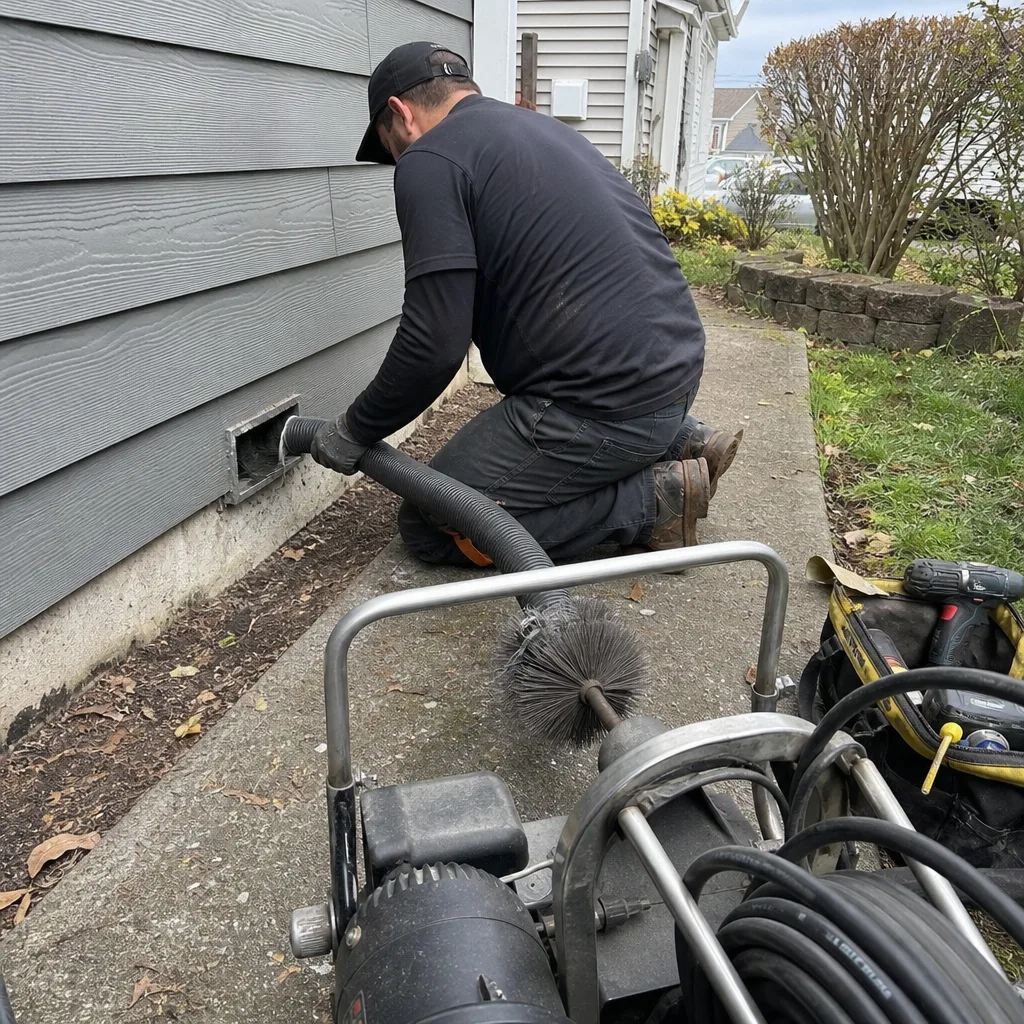 Before
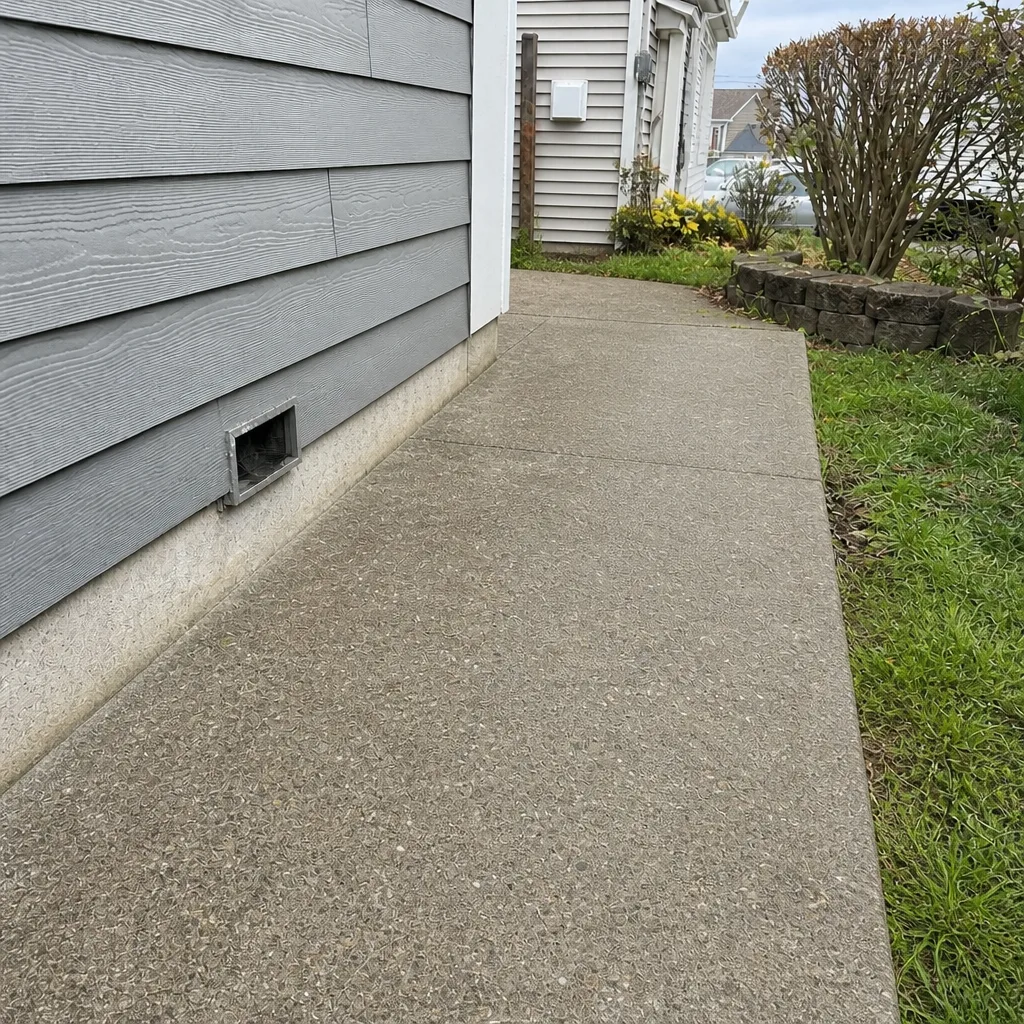 After
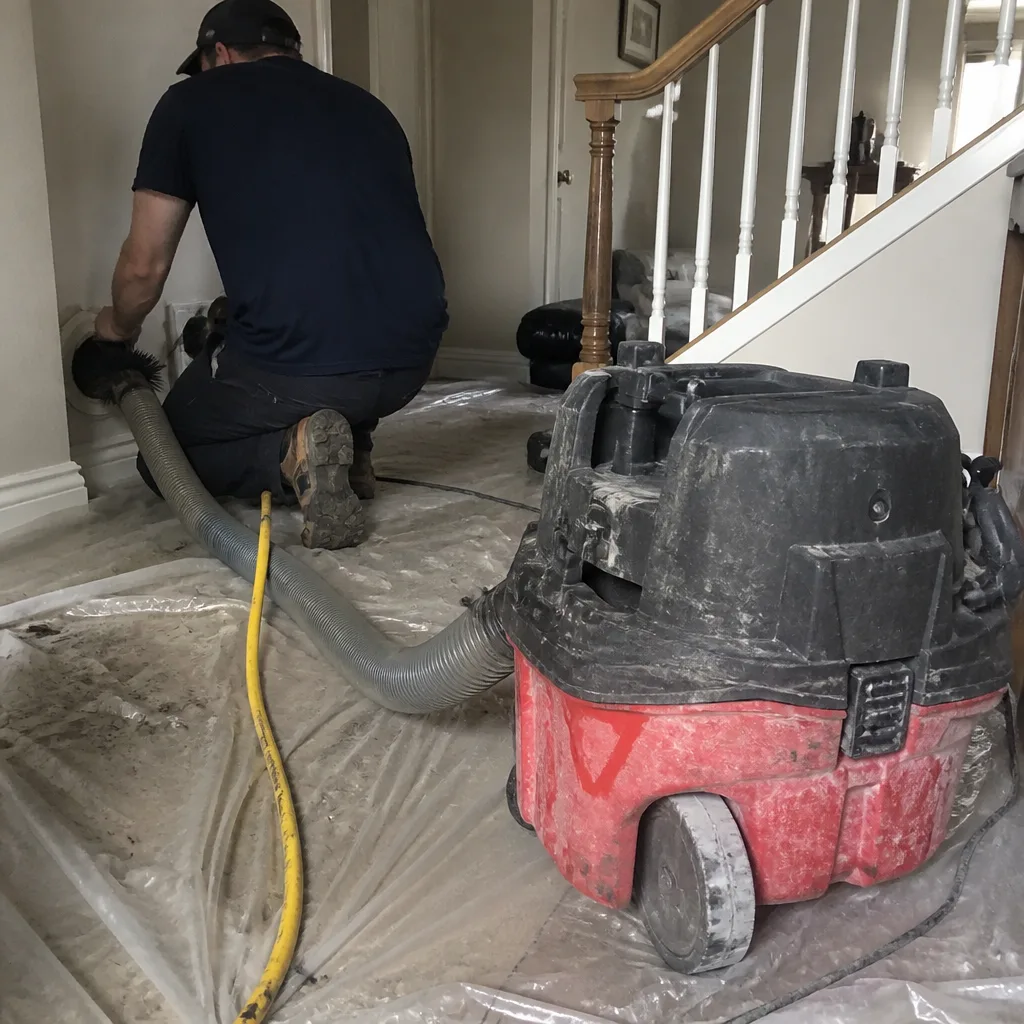 Before
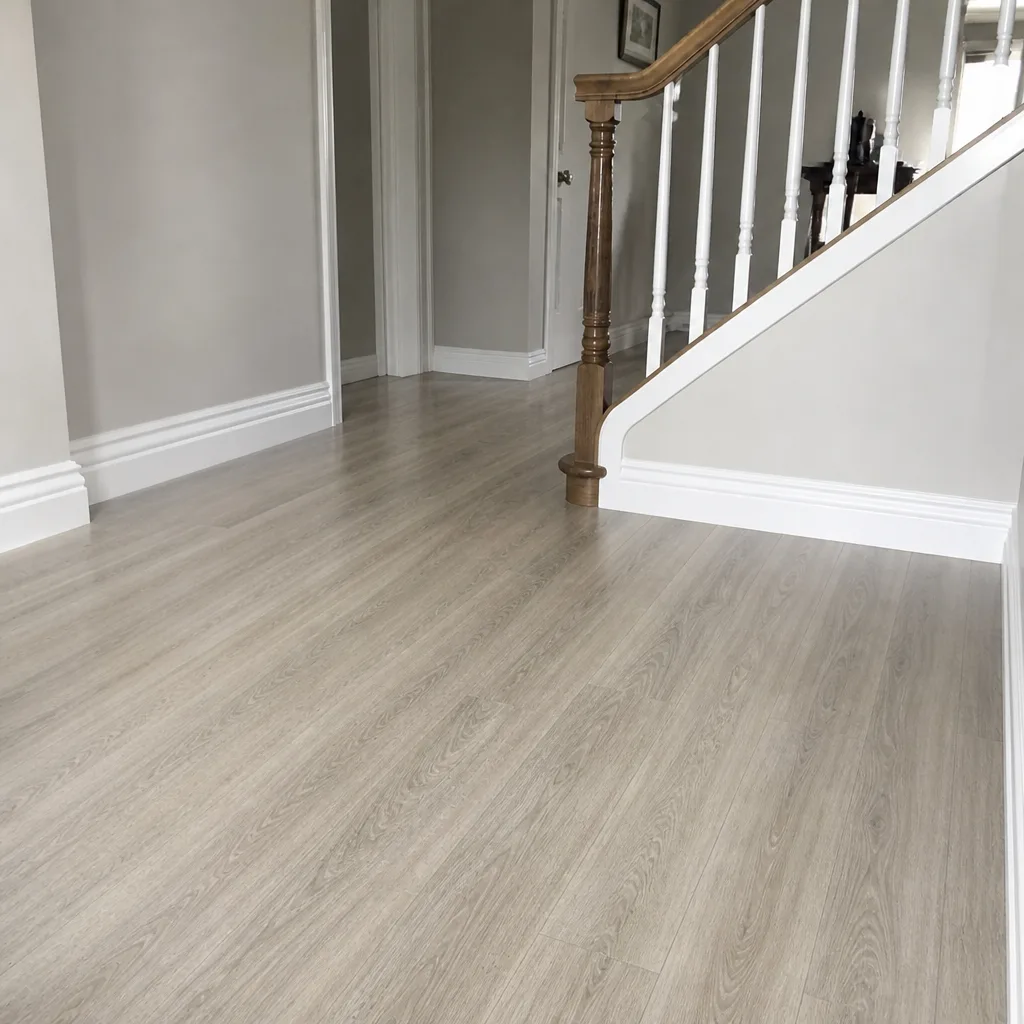 After
When to Call a Professional
Call a professional if your DIY assessment turned up any of the following: musty or sharp smells in the ductwork, visible mold at the register throat, droppings or nesting material anywhere in the system, a heavy dust plume when the system starts, a fully coated return plenum, water damage or wet ducts, or a dryer vent you can’t inspect end to end. Also call if you’re dealing with multiple air pathways at once (a duct problem plus a dryer vent problem plus an aging HVAC system) because bringing in one company to handle the whole scope usually makes more sense than three visits. Federal Way Air Duct Cleaning Co offers free estimates in Federal Way. Call (844) 625-7649. We answer 24/7. Fast dispatch from 7am to 7pm, Sunday through Friday.
Frequently Asked Questions
You can clean about 12 to 18 inches into a duct from the register opening with a shop vac and a brush attachment, and you can vacuum the register covers and grilles themselves. You cannot clean the trunk lines, the air handler box, or the return plenum with consumer equipment, because those parts of the system are physically unreachable from a register and require air volume at 2,000 CFM or higher to clear. If your assessment points past the register, call (844) 625-7649 for an exact quote on a professional cleaning. Estimates are free.
Most Federal Way homes don’t have a fixed schedule; the right interval depends on the system, the home, and what’s been happening in it. Pets, recent remodeling, a move-in to a home with unknown cleaning history, and a dryer vent that’s close to the exterior wall are all reasons to check more often. A reasonable rule: do an assessment every year, and clean when the assessment says the debris load has moved past the registers.
Usually because the cheaper quote covers less work. Per-register pricing, “whole house for one low price” teasers, and quotes that exclude the air handler or return plenum are common in the industry and lead to larger invoices once the technician is on site. Ask for a per-system price, a written scope, and before-and-after photos. Then compare quotes line by line rather than headline number to headline number. Call (844) 625-7649 for a free estimate with a written scope.
Before-and-after photos of the return plenum, the trunk, and the air handler are the most reliable evidence. Ask for them, and ask to be shown the photos on-site, not just the register covers. A technician with nothing to hide will walk you through what was found before and after the work. If photos are refused, that’s the answer. Call (844) 625-7649 to book an estimate and ask what documentation is provided.
DIY dryer vent cleaning is safe and effective when the vent run is short, straight, and easy to inspect end to end from both the appliance and the exterior termination. It is not safe or effective when the vent runs through a wall or roof, has multiple elbows, or runs longer than about 6 feet. Lint accumulation at elbows and terminations is the fire risk, and a brush kit often can’t clear it. If you can’t inspect the full run, call (844) 625-7649 for professional dryer vent cleaning.
Cleaning removes visible mold growth, and a sanitizing treatment after cleaning addresses residual growth on surfaces that were reached. Cleaning alone does not fix the underlying moisture source, so a professional job typically includes identifying and recommending fixes for the moisture problem (a condensate leak, an over-humidified home, or a blocked drain pan) because mold will return if the moisture does. We work with Abatement Technologies air filtration equipment for this kind of job. Call (844) 625-7649 to schedule an assessment.
The Bottom Line
DIY vs professional duct cleaning comes down to one question: is the contamination at the register or in the system? Consumer equipment reaches about 18 inches in and pulls a couple hundred CFM. Professional equipment reaches the whole trunk, the air handler, and the return plenum, and pulls 2,000 CFM or more with the agitation tools to break debris free. Three scenarios (surface debris, post-renovation dust, short dryer vents) are worth a DIY attempt. Four scenarios (mold, rodents, heavy debris load, wet ducts) are not. Do the assessment first, and let what you find guide the decision. In our experience, most Federal Way homes that call us for a duct cleaning genuinely need the professional version, and the free estimate tells you so before you spend anything. Our technicians have up to 13 years of experience, and we work on the whole system, from ducts to dryer vents to HVAC cleaning, with professional-grade equipment from Rotobrush, Nikro, and Abatement Technologies. If you’ve got questions after your DIY assessment, or you’d like a free estimate, Call (844) 625-7649. We answer 24/7. Fast dispatch from 7am to 7pm, Sunday through Friday.
Written by the team at Federal Way Air Duct Cleaning Co.